




TEDxEAEBusinessSchool: José Luis Santamaría and Collective Artificial Intelligence
Artificial Intelligence is a very popular term nowadays, but what do we mean when we talk about Collective Artificial Intelligence? In an increasingly globalized and interconnected society, it no longer makes much sense to talk about the individual. In fact, just the opposite is true nowadays, with terms such as group and collective becoming essential not only in terms of understanding and analysing the present, but also for thinking about the future.
Recently, within the framework of the successful TEDxEAEBusinessSchool event, the entrepreneur and lecturer, José Luis Santamaría, discussed all aspects of this topic, as well as relating it to Artificial Intelligence. Find out more in this review of the presentation entitled “Collective Artificial Intelligence: The Last Jedi resolving organizational problems”.
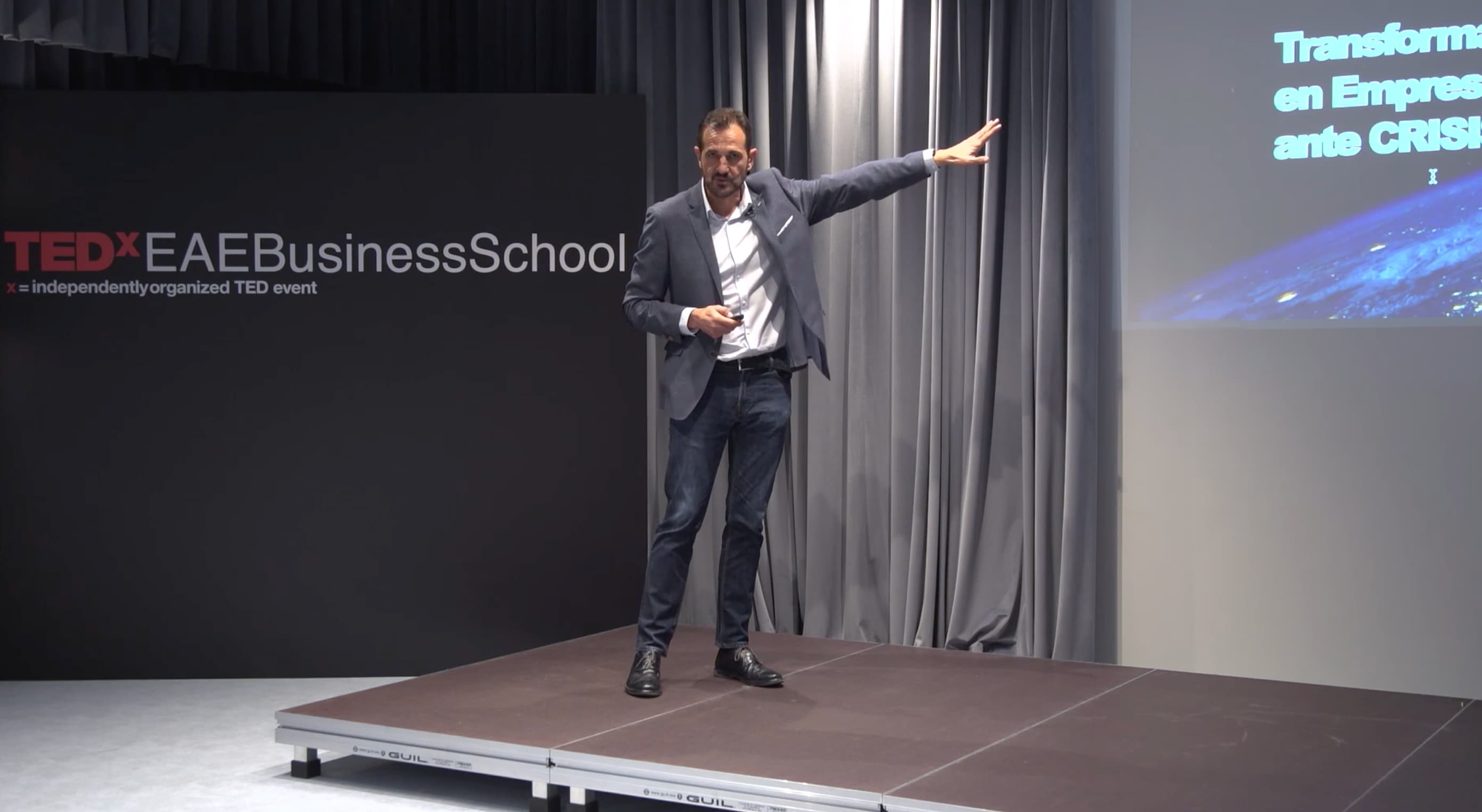
“When human collectives have to tackle certain challenges as a group, we tend to be quite stupid naturally”, explained José Luis. “For instance, think about residents’ organizations, parliaments, companies, etc.”. But why does this happen and what can we do about it?
In many cases, challenges drive aspirations. However, beyond the challenge itself, what matters is how we tackle the challenge, because that is what makes the difference. The speaker emphasized that “perhaps the way that we approach this challenge in terms of collective intelligence is the aspect that we have to analyse and think about in order to resolve this ‘collective stupidity’ that we associate with working together”.
To give us a more in-depth insight into the analysis, the lecturer focused a large part of his presentation on explaining 2 kinds of factors:
1 - Factors in terms of shortcomings
On the one hand, he explained that humans lack certain factors that hinder the development of collective intelligence. “Our inability to ask open questions is one of the big problems we face nowadays”, he emphasized. Although we may ask a lot of questions, it is the open ones that are really useful when solving a challenge”.
Another factor that the lecturer mentioned was the need to manage our emotions effectively. “Emotions are neither good nor bad. They are useful or not useful”, explained José Luis Santamaría. “When we are asked open questions about a challenge, certain emotions are triggered within us that decrease our objectivity. This is the aspect that we have to work on if we want to make our emotions useful again”.
2 - Factors related to the skills and capacities we have
On the other hand, there are certain skills and capacities that can be very useful when developing collective intelligence.
One of the factors that work in our favour is our capacity to manage complex problems. Showing the bones of an ancient hand, the lecturer explained that “even our anatomy has changed to help us solve problems and create tools to overcome challenges”.
Other factor that he highlighted was our linguistic and symbolic capacity. On this point, he emphasized that the great leaps forward made by humankind have primarily been triggered by advances related to language, such as writing, the alphabet and printing, for example.
Lastly, José Luis Santamaría mentioned human beings’ natural capacity to collaborate and show solidarity with others. “This factor is enhanced by an individual’s sense of belonging to the collective and the understanding that the challenge that they are facing really effects the collective as a whole”.
How can we overcome our shortcomings and enhance the factors that work to our advantage?
So, if humans want to make progress in terms of collective intelligence, they have to focus on the abovementioned factors. “To overcome the former and enhance the latter, we have to look at the environment around us and copy what we see”, explained the lecturer. “For example, the animal kingdom gives us the best demonstration of natural collective intelligence that we could hope to find”.
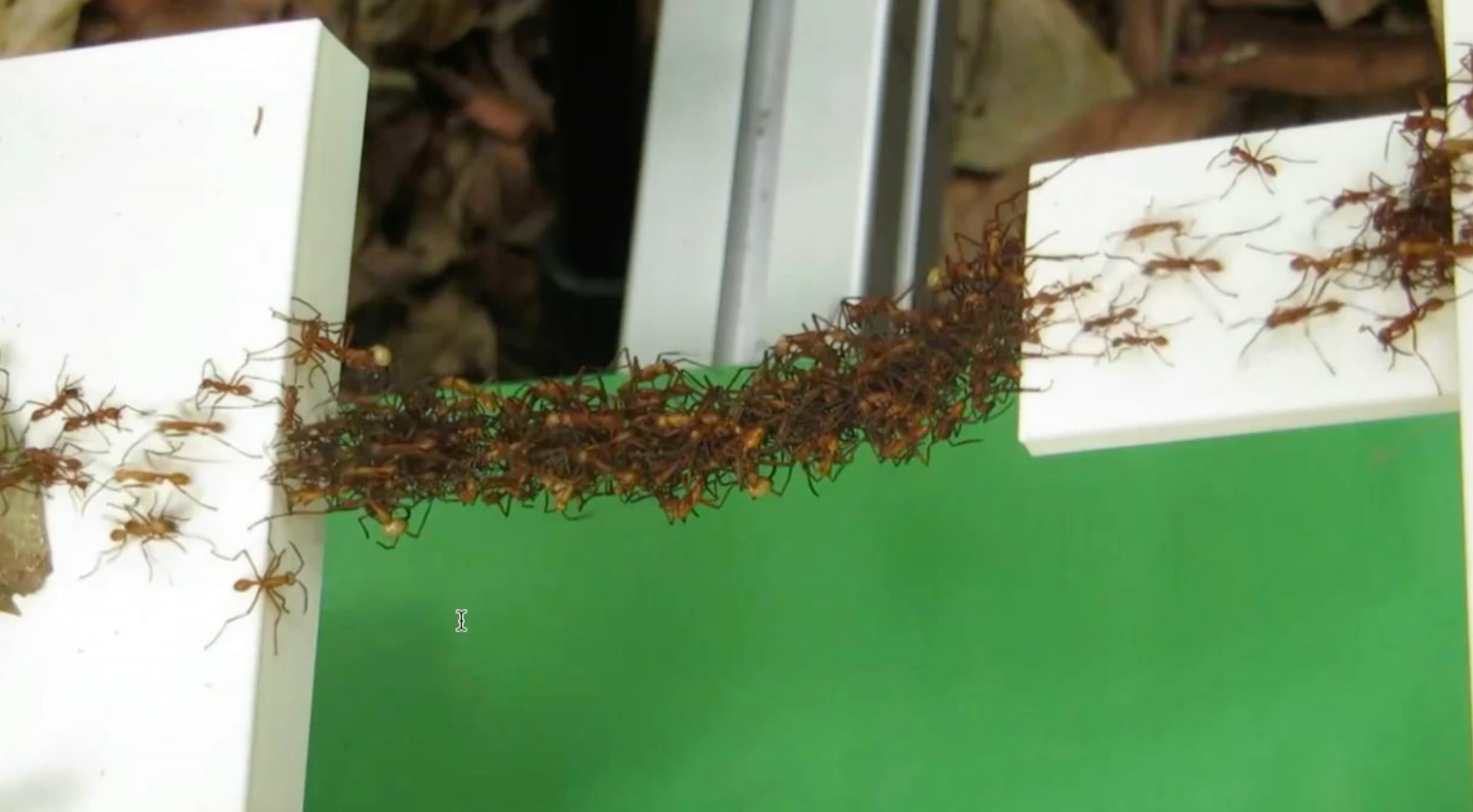
“Ants are not individually intelligent but collectively they are”. In the above image, we can see how these insects have been able to build a bridge without the need for video conferences, architects or studies. How do they manage it? Collective swarms, as all these animals that work as a group are now, organize themselves using extremely simple algorithms that enable them to achieve absolutely fantastic results.
“Self-regulation, coopetition, mimicry and stigmergy are the principles that these collectives use every single day”, explained José Luis Santamaría. “In our case, they can also help us to overcome a large number of challenges”. But what do these terms mean? Let’s find out:
Self-regulation: This mechanism gives collectives the capacity to resolve complex challenges using very simple rules that result directly from the evolution of the organisms.
Coopetition:This is the capacity to cooperate and compete. For instance, bees do this in order to ensure the best food for every individual in the hive.
Mimicry: This is a mechanism used by fish, for example, when they swim together to offset the threat from predators.
Stigmergy: Stigmergy:
The lecturer enthusiastically emphasized that we can use these principles as a basis on which to develop a set of algorithms that enable us to artificially generate collective intelligence, so we could then talk about Collective Artificial Intelligence. There are people striving to achieve this all over the world. Here in Spain, we have already created some algorithms with really good results”.
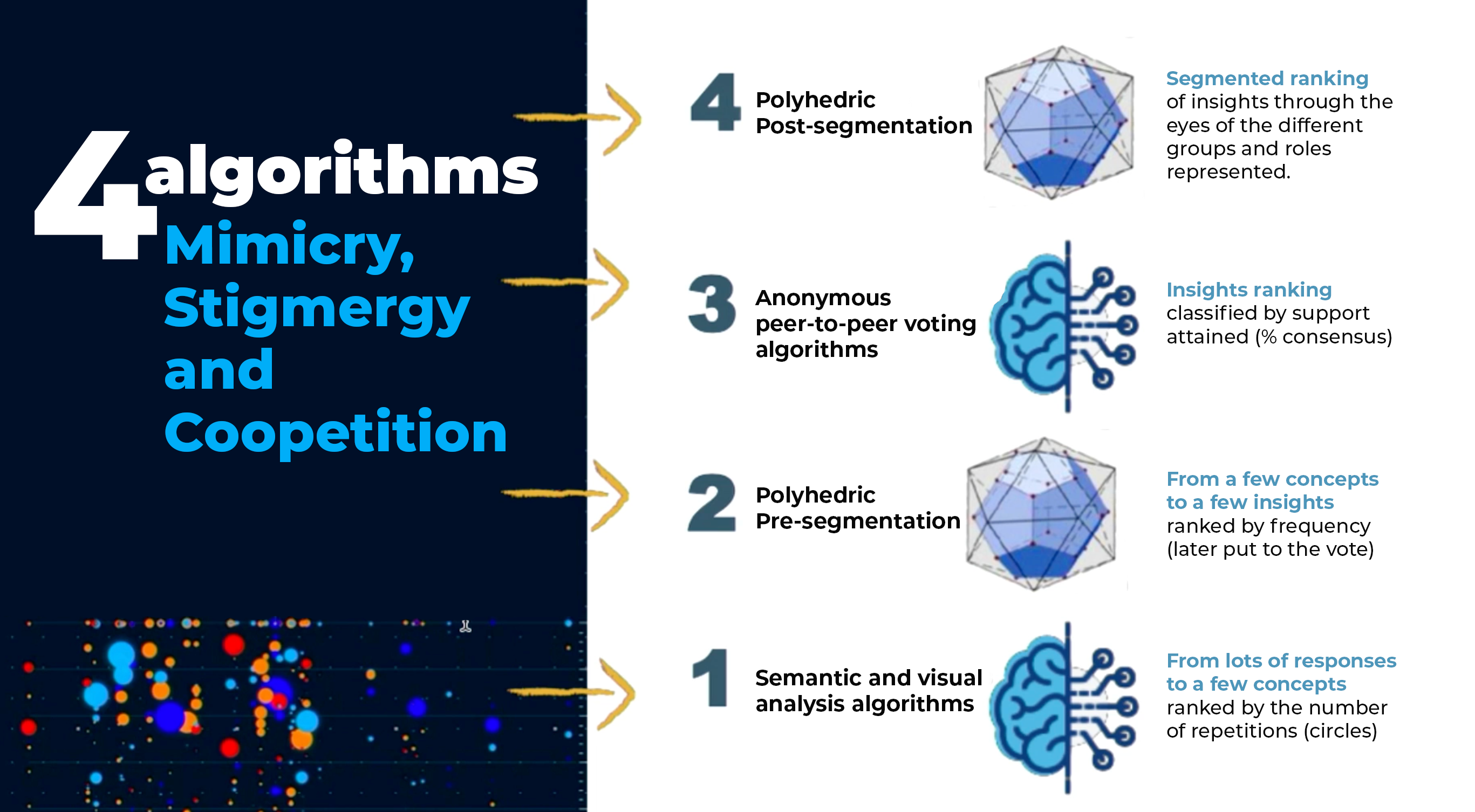
These algorithms have been applied to over a hundred companies that, through technology, are already started to develop Collective Artificial Intelligence with the aim of improving their culture and thereby boost the likelihood of achieving their goals. This enables them to tackle crises, make more effective decisions and, ultimately, build a better world.
After 15 minutes of presentation, José Luis Santamaría brought the session to a close. We encourage you to be collectively smart!